

How To Trim Lilac Bushes Youtube
Quick facts
- Lilacs may accept a few years to bloom afterward planting.
- Once established, lilacs can live a long time.
- Lilacs need pruning immediately after blooming to promote flowering the next year.
- Lilacs usually produce new growth (suckers) from the root area.
- Planting a variety of lilac species and hybrids can provide continuous fragrance and extend the flower time into early on summer.
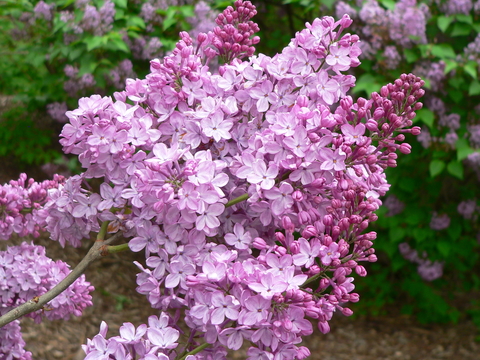
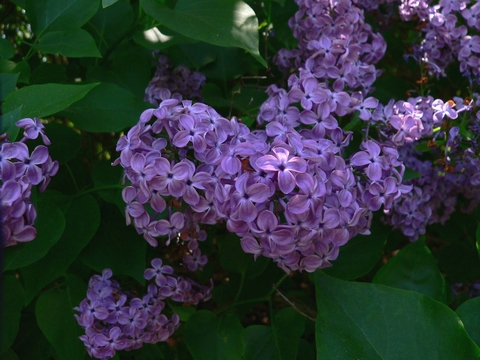
Lilacs are a favorite, long-lived, spring-blooming shrub. They are primarily grown for their fragrant flowers ranging from white to pink to deep purple.
Lilacs are native to Eastern Europe and Asia. The genus Syringa comes from the Greek word syrinx meaning pipe or tube and refers to the lilac's stem which can be hollowed out.
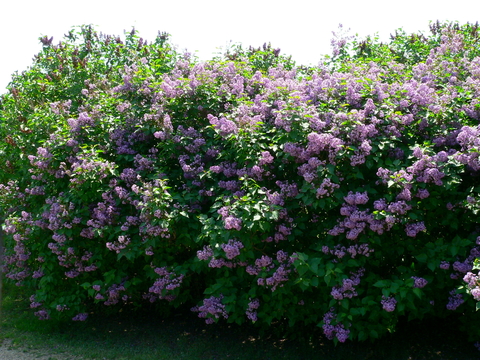
In the landscape, lilacs brand first-class hedges, foundation plants, specimen plants, large borders and grouping plantings. They bloom for 10 to 14 days, depending on the atmospheric condition, and have a distinctive sugariness fragrance.
Lilacs also provide habitat for small birds and pollinating insects.
Growing lilacs
- Hardiness zone: 3 to seven depending on the species.
- Full lord's day (six+ hours); less sun reduces flowering and increases powdery mildew.
- Moist, well-drained soil; avoid wet soils with poor drainage.
- Soil pH 7.0 to slightly alkaline. Have your soil tested by the U of 1000 Soil Testing Lab.
- Infinite new plants based on mature size.
- Planted too close, lilacs will crave more pruning and volition reduce bloom.
- Proper spacing increases air apportionment and reduces powdery mildew.
- In one case the lilac is established (two to 3 years afterward planting), fertilize every few years with an all-purpose shrub fertilizer.
- Avert applying lawn fertilizers nigh or around lilacs as the high nitrogen content will increase leaf production and decrease flower production.
- Water after planting. Make sure the soil drains hands and does not pool.
- Poor drainage can issue in stunted growth, fewer flowers and root rot.
- This video (28:44) gives selection, planting and growing information.
Like other spring blooming shrubs, lilacs develop flower buds for the next yr after blooming during the electric current twelvemonth. Lilacs should be deadheaded immediately afterward blooming to encourage good bud development and flowering the post-obit spring.
- Deadhead: Employ a hand pruner to cut off dead flower heads downward to a pair of leaves, or apply a hedge trimmer for larger plantings. Shear lightly, taking off only the dead flower heads.
- Renewal pruning: Renewal pruning allows more light throughout an older institute and encourages new stems to abound and bloom. Newly planted lilacs usually do not demand pruning for ii to three years and it will take ane or two years before a lilac blooms. Years afterwards, lilac stems can abound very large and tree-like and they volition tend to shade out new growth at the plant base.
- Use a lopper or hand saw to remove a third of the thickest stems at the base of operations.
- Exercise this every year until all large stems are removed.
- Rejuvenation pruning is a technique for smaller, densely-branched lilacs similar Korean or Meyer lilacs (Syringa meyeri) that have become overgrown.
- In late winter, use a saw or hedge trimmer to cut the entire constitute to the ground.
- New growth will grow from the root area in spring.
- The plant may not bloom or sparsely bloom for i or ii years.
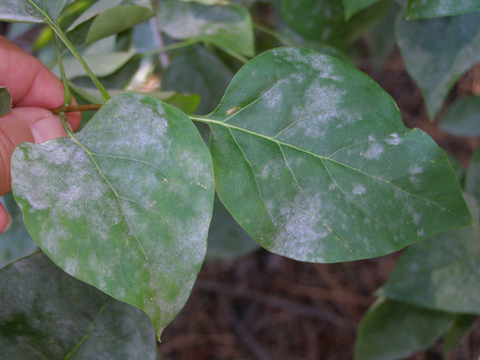
- Powdery mildew is common and cosmetic only; choose disease-resistant cultivars.
- Lilac borer is the larvae of the clearwing wasp.
- Bacterial blight is more mutual in cool, wet weather.
Causes for a lack of flowers:
- Plant is not yet well-established. Afterwards planting, a lilac'south energy reserves will be used for developing a strong root system rather than flowers or leaves. Some blooming may brainstorm in years ii and 3. Be patient and continue to care for your lilac.
- Plants are not receiving enough sunlight. Make sure your lilac has 6 or more than hours of full sunday per day. If the lilac has become shaded by another institute over fourth dimension, consider pruning the other found.
- Besides much nitrogen fertilizer is being applied, causing the plant to put energy into growing leaves, not flowers. Don't apply lawn fertilizers (high in nitrogen) around the base of lilacs. Found lilacs in garden beds, not lawns.
- Pruned at the wrong fourth dimension of year and cut off flower buds. Lilacs set flower buds for the adjacent year right after blooming is finished, and then prune immediately subsequently flowering.
- For more nigh lilac issues and solutions see What's wrong with my plant?
Species and cultivated varieties of lilacs for Minnesota
The following department is non a complete listing of cultivars available commercially. For a wider pick:
- Visit your local garden eye. Have a listing of establish features yous desire in a lilac, particularly the size of your planting space.
- Utilise our plant selection plan. It is free and takes just a few minutes to ready up and confirm your user business relationship. Instructions can be plant at Institute Elements of Pattern.
- Read Lilacs for Cold Climates by Dr. Laura Jull, associate professor in horticulture, University of Wisconsin Extension.
The post-obit lilac species and cultivated varieties are organized by bloom time (early to late). Plant sizes are listed height x width. Hardy in zones three-7 unless otherwise indicated.
|
Syringa x hyacinthiflora, Early on flowering lilac, Hyacinth lilac: seven-12 ft 10 8-10 ft. Adept for foundation plants. Affliction resistant. Cultivars: 'Excel', 'Maiden's Chroma', 'Pocahontas'
Due south. oblata, Early on lilac, Broadleaf lilac: 8-12 ft 10 8-x ft. Compact form. Disease resistant. Cultivars: 'Betsy Ross', subsp. dilatata Korean early lilac, 'Cheyenne'
South. x chinensis, Chinese lilac: Zone 4a. 7. 8-12 ft x 8-12 ft. Prolific blooms, dense leaves and flowers down to the ground; good for a large screen. Diseases: powdery mildew, bacterial blight. Cultivars: 'Saugeana', 'Lilac Sunday'
S. x laciniata, Cutleaf lilac, Cutleaf Western farsi lilac: Zone 4b. five-6 ft x 5-8 ft. Rounded, open grade, little pruning needed. Disease resistant.
S. meyeri 'Palibin', Meyer lilac, Palibin lilac, dwarf Korean lilac: Zone 4a. iv-half dozen ft 10 4-6 ft. Forms a adept, depression screen. Disease resistant. Cultivars: 'Palibin'
S. 10 persica, Persan lilac: 4-eight ft 10 5-viii ft. Sterile, no seed capsules produced afterwards blooming. Affliction: powdery mildew, bacterial blight.
Southward. pubescens ssp. patula, Manchurian lilac: 5-7 ft ten iv-six ft. Adept for foundation plants. Cultivars: 'Miss Kim', 'Klmone' Miss SusieTM
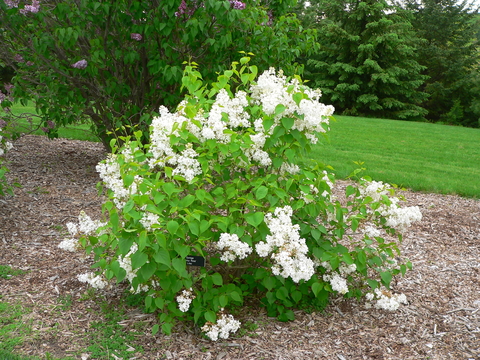
S. vulgaris, common lilac, French lilac: 8-15 ft x 6-12 ft. Expert for hedges, living fences, alpine borders, wildlife. Diseases: powdery mildew, bacterial blight; some cultivars are resistant. Cultivars: 'Sensation', 'Mme. Lemoine', 'Wonderblue', 'Ludwig Spaeth', 'Beauty of Moscow', 'Primrose', 'Alba', 'President Grevy', 'Edith Cavelle', 'Katherine Havemeyer', 'Charles Joly', 'Mrs. Due west.E. Marshall', 'Mme F. Morel', 'Montaigne'.
S. baibelle PP12,294, Tinkerbelle® lilac: 4-half dozen ft x four-five ft. Affliction resistant. Developed past Neal Holland, Sheyenne Gardens, ND. Other plants in the Fairytale® series introduced by Bailey Nurseries (MN): Southward. Baillina, 'Thumbelina®, S. Bailming, Prince Charming®, S. Bailsugar, Saccharide Plum Fairy®, Baildust, Fairy Dust®.
Due south. x prestoniae, Preston lilac: Late blooming, more reddish in flower color. Cultivars: 'Miss Canada', 'Minuet', 'Hiawatha', 'Donald Wyman'
Images of some of the lilac varieties listed above
(click on an paradigm to enlarge)
S. ten 'SMSJBP7' PP26,594, Bloomerang® Dark Purple Lilac: 4-5 ft x four-5 ft. A central feature of this lilac is that it blooms both in leap and belatedly summertime. Disease resistant.
Reviewed in 2019
Source: https://extension.umn.edu/trees-and-shrubs/lilacs
Posted by: henkeboxistaken.blogspot.com
0 Response to "How To Trim Lilac Bushes Youtube"
Post a Comment